Foundations of cross-border e-commerce – technical requirements
Before you launch, ensure your tech stack covers the following:
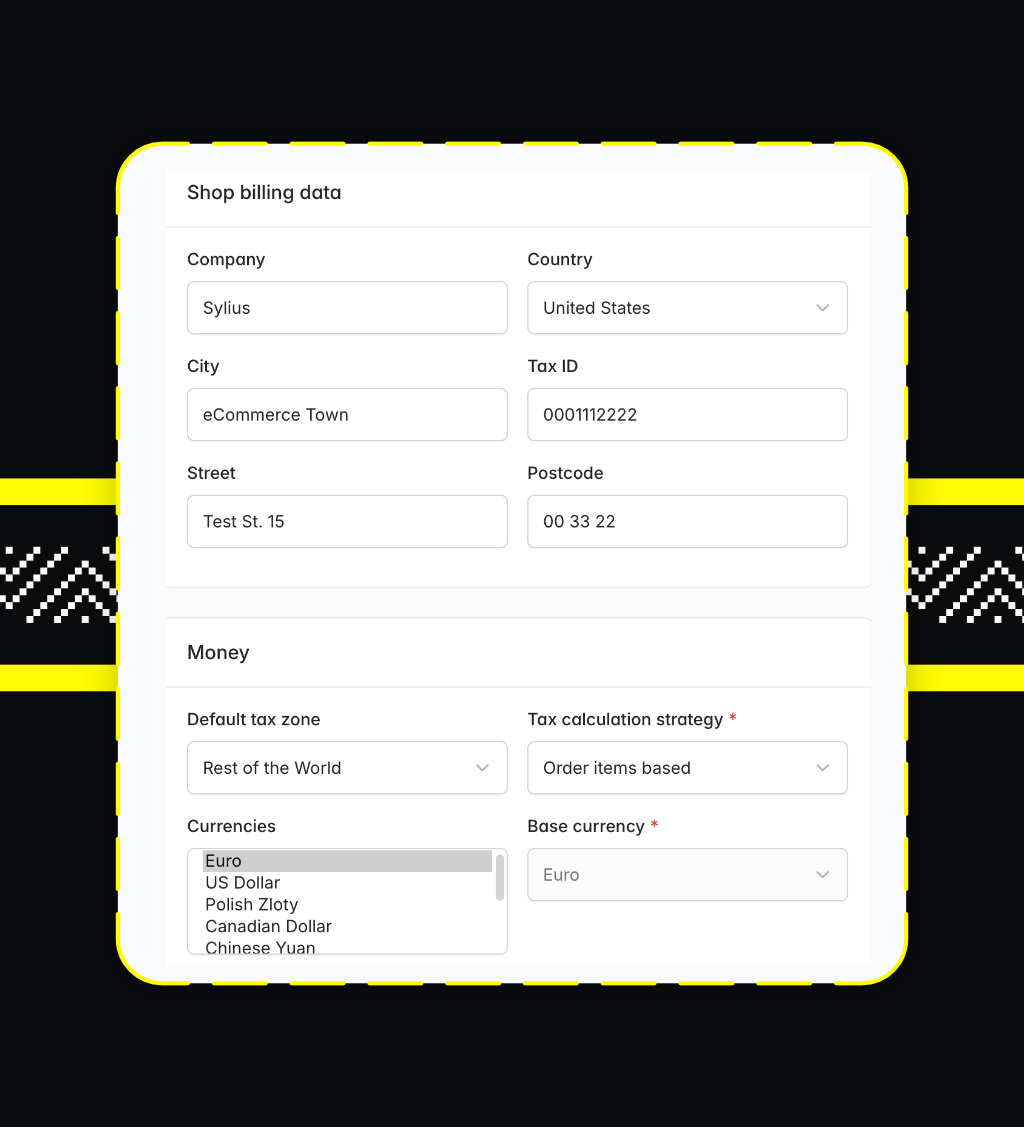
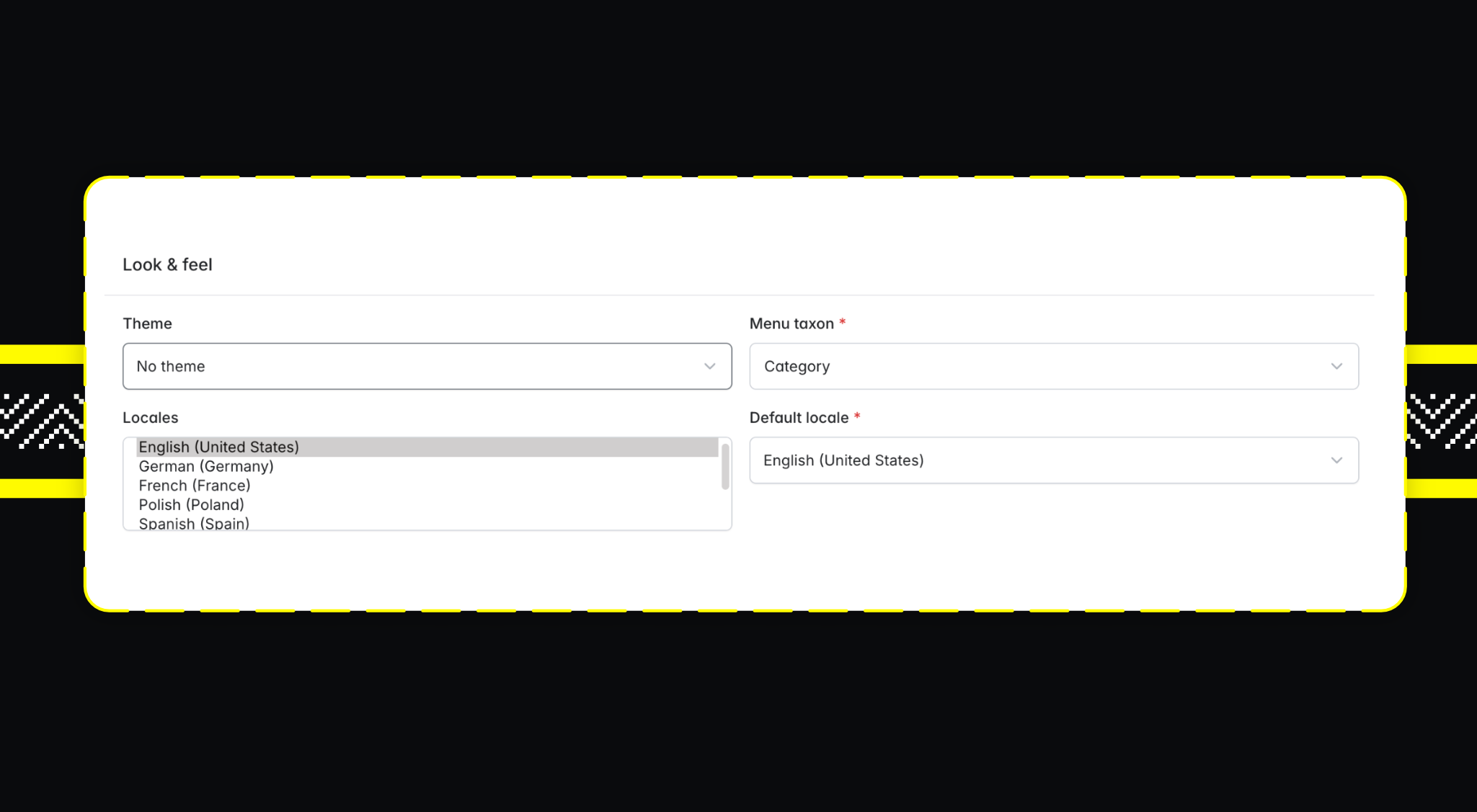
Localization. Support for multiple currencies, date formats, units of measure, and region-specific form validation (e.g., zip codes).
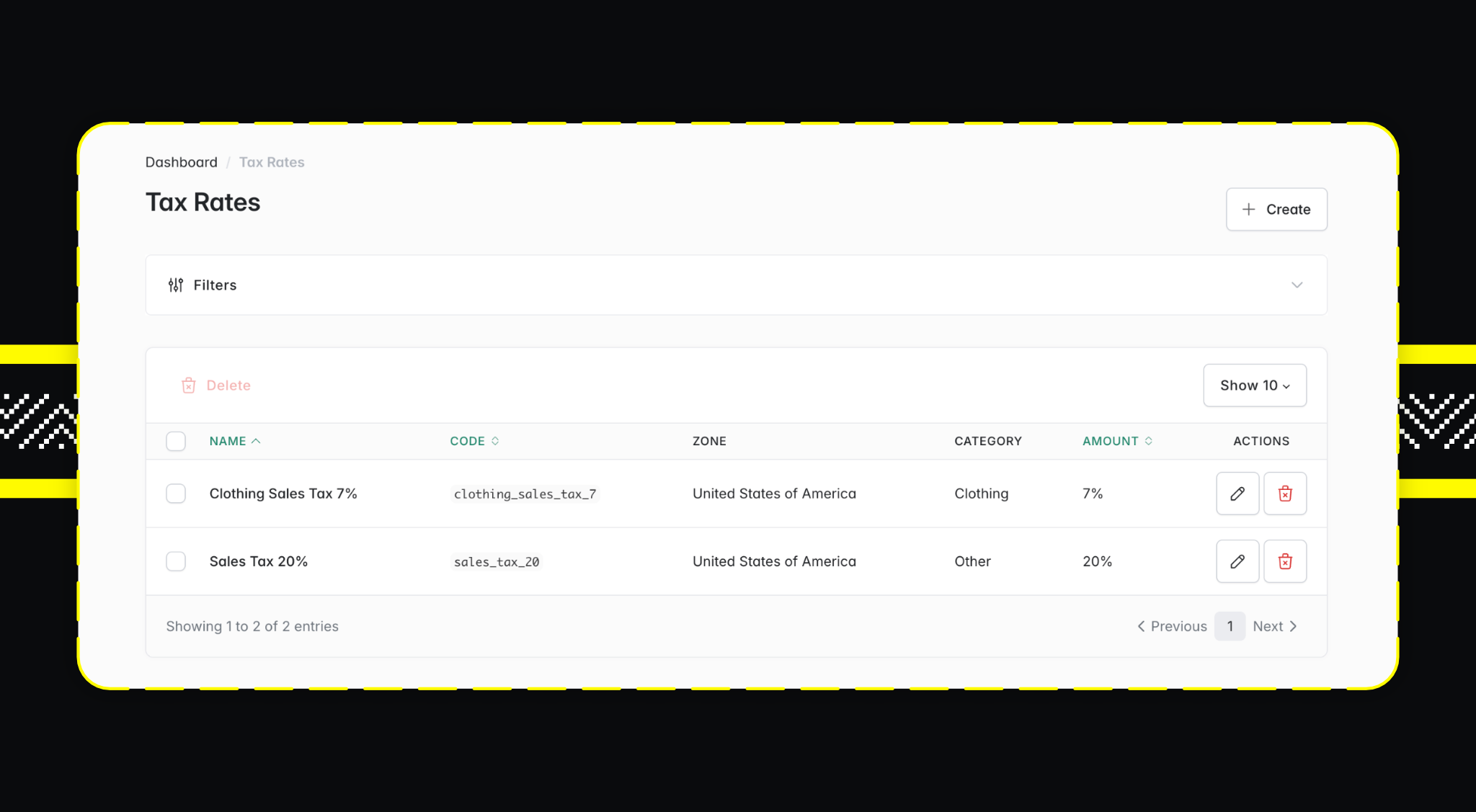
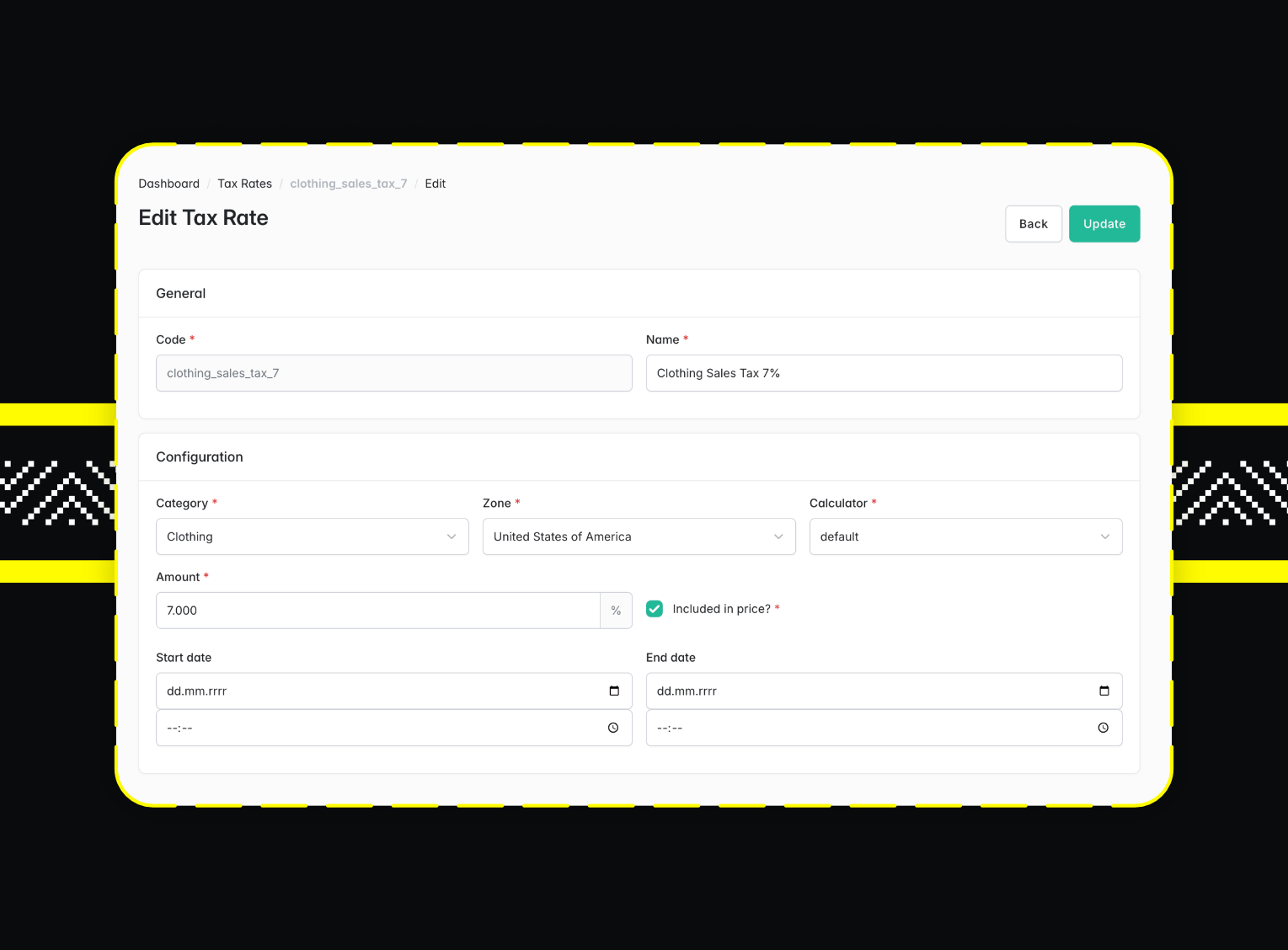
Taxation. Dynamic VAT calculation for the EU and Sales Tax compliance for the US.
Payments. Integration with local payment methods instead of relying solely on credit cards.
Logistics. Multi-warehouse architecture and zone-based shipping rates.
Compliance. Market-specific legal requirements.
Technical SEO: Correct implementation of hreflang attributes and elimination of mixed-language content.
Localization – beyond simple translation
Multilingualism is just the tip of the iceberg. True internationalization in Sylius enables:
Price psychology. Setting fixed price points (e.g., €19.99) instead of automated currency conversions (e.g., €18.43), which can hurt customer trust.
Local formatting. Contextual decimal separators and language-specific alphabetical sorting.
Form validation: Customizing address fields to local standards (e.g., State/Province requirements in the US/Canada).
Translation automation: Leveraging Sulu CMS and DeepL API for bulk product attribute translations while maintaining high linguistic quality.
Technical SEO: Clean structures (domain.com/de/ vs. https://www.google.com/search?q=de.domain.com) and translated URL slugs for localized indexing.
Taxes and compliance: VAT OSS, sales Tax, and legal traps
Tax calculation errors lead to frozen payment gateways and heavy fines. SaaS platforms often require expensive add-ons for global fiscalization, which can be cost-prohibitive at scale.
European Union – VAT OSS procedure
The system must dynamically update the tax rate (e.g., 19% in Germany, 23% in Poland) in the cart based on the delivery address before the customer reaches the payment step.
Pro-tip: In countries like Switzerland, tax rates can vary by region (Canton).
USA – The sales tax and economic nexus challenge
The US lacks a unified VAT. Sales tax varies by state, county, and even zip code. Due to this complexity, integration with engines like Avalara or TaxJar is essential.
Why Sylius wins over SaaS in taxation
Sylius allows you to define tax categories (e.g., digital goods, apparel) and rates, then assign them to specific sales channels.
Flexibility. Taxes are calculated in milliseconds without blocking the checkout flow.
Data accuracy. Each country requires specific invoice data (e.g., SDI Code in Italy, EU VAT ID in Poland). Sylius allows for flexible data model extensions, ensuring your ERP receives 100% compliant data –a feat often impossible with "rigid" SaaS checkouts.This is one of the key areas where the advantage of a dedicated framework becomes evident in the Sylius vs. SaaS debat
Cross-border payments – local methods that drive conversion
Lack of trust is one of the most common reasons for cart abandonment in cross-border e-commerce. If a customer doesn't see a payment logo they recognize and trust, they assume the store is not secure. What is considered a market standard in Poland may be perceived as exotic or unreliable in the Netherlands or Germany.
How Europe pays
Market |
Popular local methods
Alternative to cards |
Why it's essential |
|---|
Poland |
BLIK, PayU, Tpay, Przelewy24 |
The market standard. Cards are not enough. |
Germany |
PayPal, Klarna (+SEPA), Sofort |
PayPal is #1 in Germany. |
Netherlands |
iDeal |
Accounts for ~70% of transactions. A must-have on this market. |
France |
Cartes Bancaires |
The local debit card system. |
Nordics |
Vipps, Swish |
Bank-linked mobile apps. |
Global / Mobile |
Apple Pay, Google Pay |
Mandatory for mobile traffic (often +30% cart share). |
The Sylius advantage – payment routing
While many SaaS platforms force you into a single provider with high conversion fees, Sylius allows intelligent payment routing per channel:
Polish User → Tpay
US User → Stripe
Dutch User → Mollie
As a result, customers only see payment methods relevant to their region, while you optimize transaction costs.
Alternatively, you can integrate a single global aggregator such as Adyen, Stripe, or Saferpay (Worldline). It is worth noting that at Commerce Weavers, we are the authors of the official Saferpay integration, providing us with unique, deep-level insights into enterprise payment architecture
Logistics – multi-warehouse and intelligent shipping
International logistics is where margins are often lost. Sylius avoids the rigid limits of "out-of-the-box" platforms:
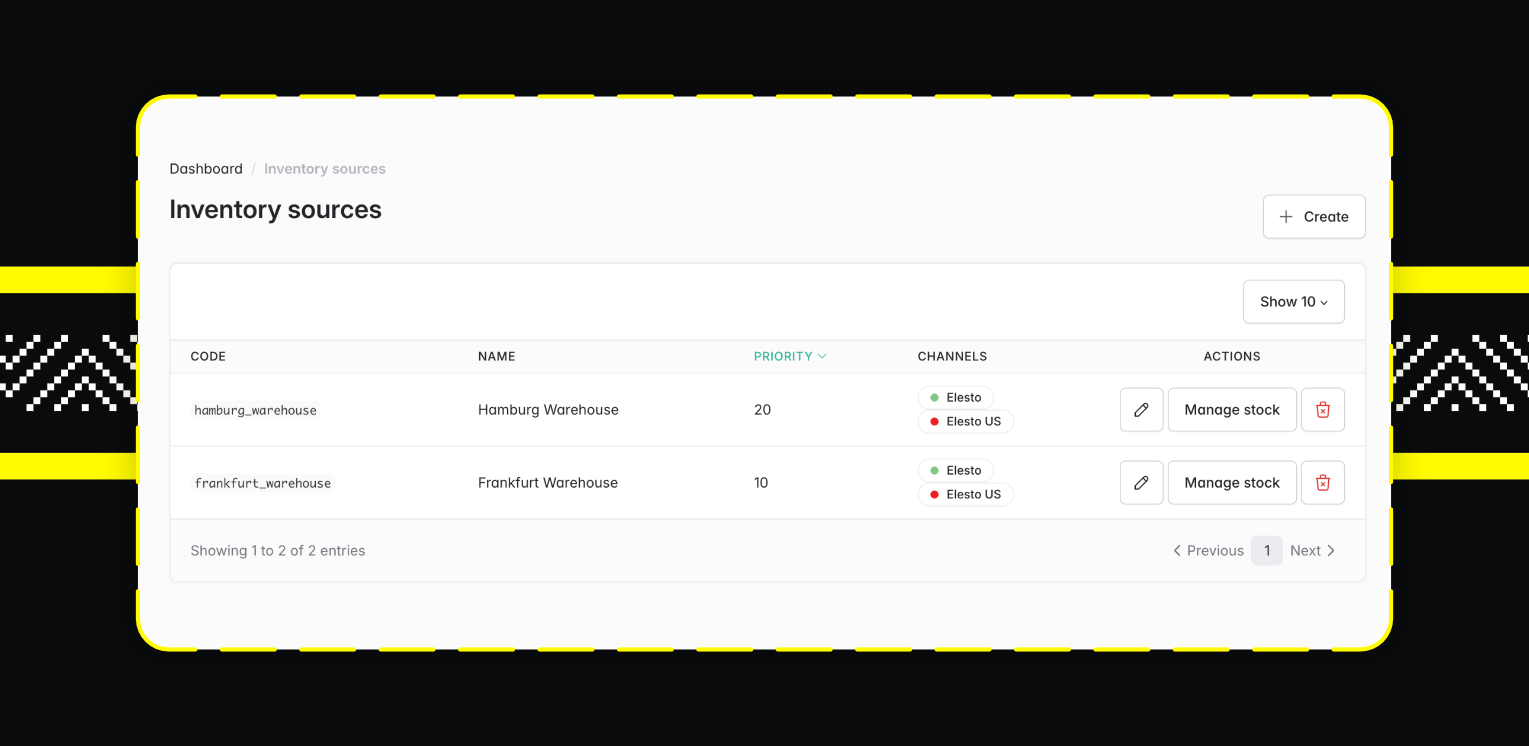
True multi-source inventory. Manage shipments from multiple locations (e.g., a central warehouse in Poland + Amazon FBA in Germany).
Zone-based shipping. Defining rates not just by country, but by province or state (e.g., different rates for mainland vs. Sicily or Corsica).
Volumetric vs. dead weight. Calculating costs based on package dimensions, not just weight.
Seamless integration. Full control over data flow between Sylius, ERP, WMS, and 3PL providers.
Migration strategies: Big Bang vs. Strangler Fig Pattern
If your current solution is stifling your expansion, you don't have to tear everything down at once. There are two proven paths forward.
Path A. Full migration (Big Bang)
A complete "lift and shift" of frontend, backend, and database to Sylius.
Path B. Hybrid migration (Strangler Fig Pattern)
Launch Sylius only for a new market (e.g., a dedicated German domain) while the existing store remains stable on the old engine. Gradually "strangle" the old system by migrating countries or features one by one.
Expert Note: Migration is a significant challenge. Ensure your team is ready by reading our guide: How to prepare your development team for a Sylius implementation.
At Commerce Weavers, we know how to migrate data to ensure a smooth transition.

Is your e-commerce platform blocking your expansion?
Don’t let technology limit your business growth. Consult your cross-border plans with us. We will help you design an architecture capable of handling global sales.
FAQ – cross-border e-commerce on Sylius
Does Sylius support multiple currencies and languages natively?
Yes. Sylius uses a channel-based architecture. Each channel can have its own currencies, languages, and price lists, allowing you to manage multiple markets from a single admin panel with full data separation.
What is multi-source inventory and why is it important for expansion?
MSI allows the system to manage stock across multiple locations. For global expansion, this enables intelligent order routing to the warehouse closest to the customer, drastically reducing shipping times and costs.
Will migrating to Sylius affect my international SEO?
Sylius provides full control over technical SEO. It natively supports hreflang tags, localized URLs, and allows you to choose between subdomains or subfolders ensuring Google indexes your local versions correctly.