This technical guide decomposes how Sylius structures its core multi-currency domain models and internal tax processing engines. We will analyze price translation mechanics, isolate channel-specific base currencies from customer-facing display options, and evaluate how the framework dynamically compiles line-item VAT configurations.
How Multi-Currency Configuration Functions in Sylius
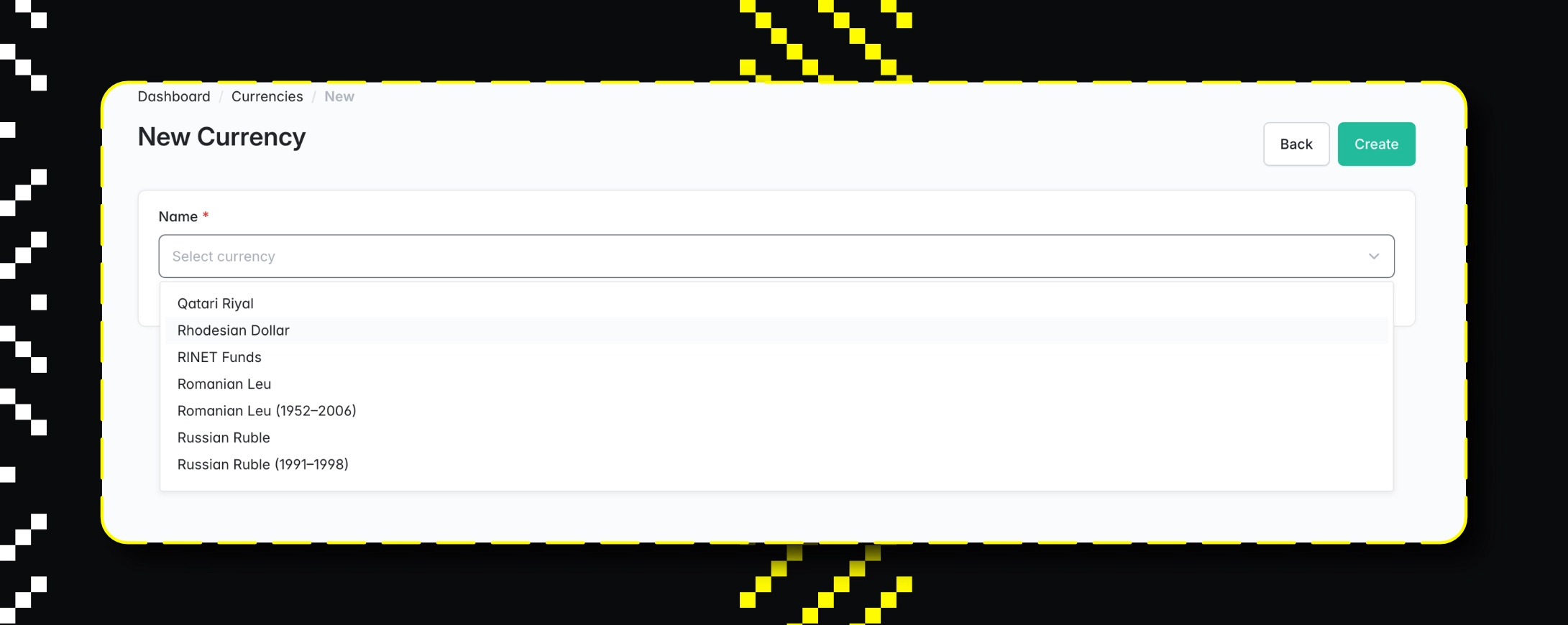
The global initialization of currency records is managed within the Sylius administrative panel under Configuration → Currencies. From this interface, an administrator registers the explicit ISO currency entries intended for use across the broader platform deployment.
However, simply instantiating a currency record within the global schema does not expose it within the storefront application.
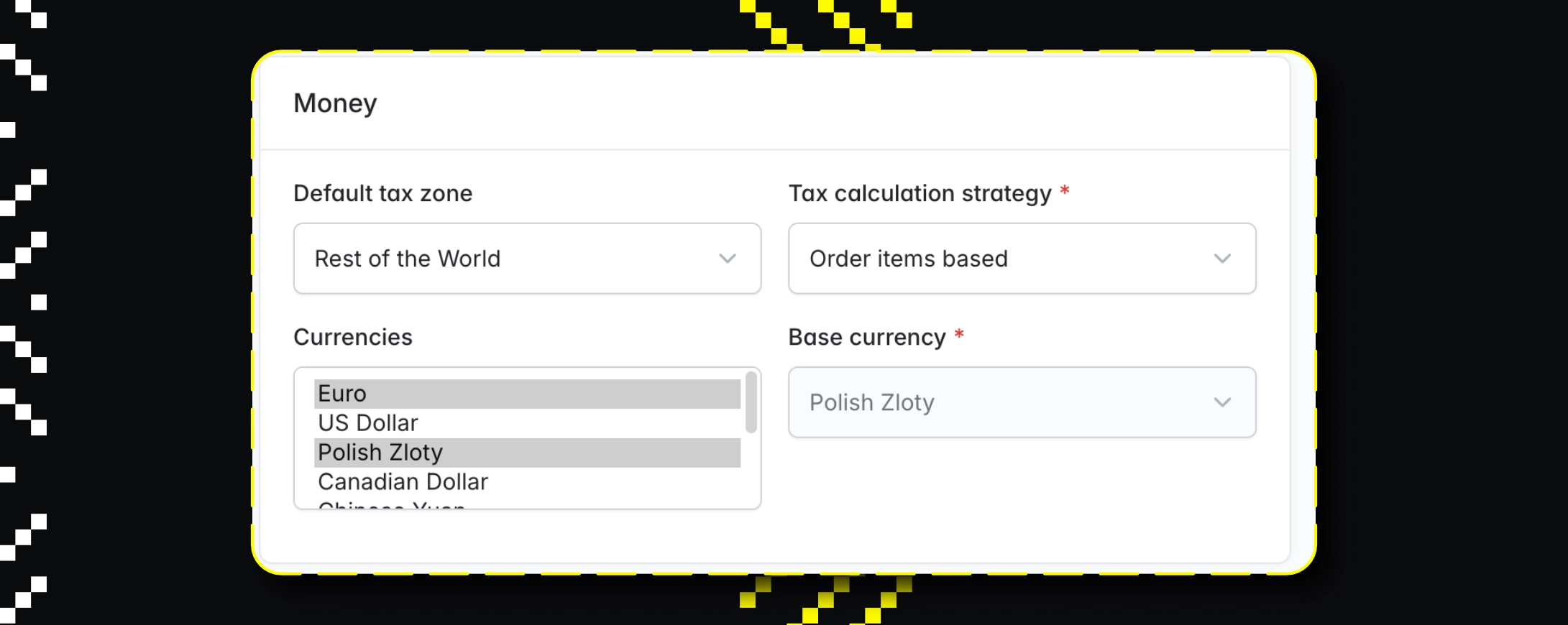
Because Sylius natively leverages a decoupled multi-channel architecture, currencies must be explicitly bound to distinct sales channels. This isolation ensures that independent regional storefronts maintain distinct transaction boundaries, localization matrices, and settlement setups.
Base Currency vs. Customer-Facing Currencies in Sylius
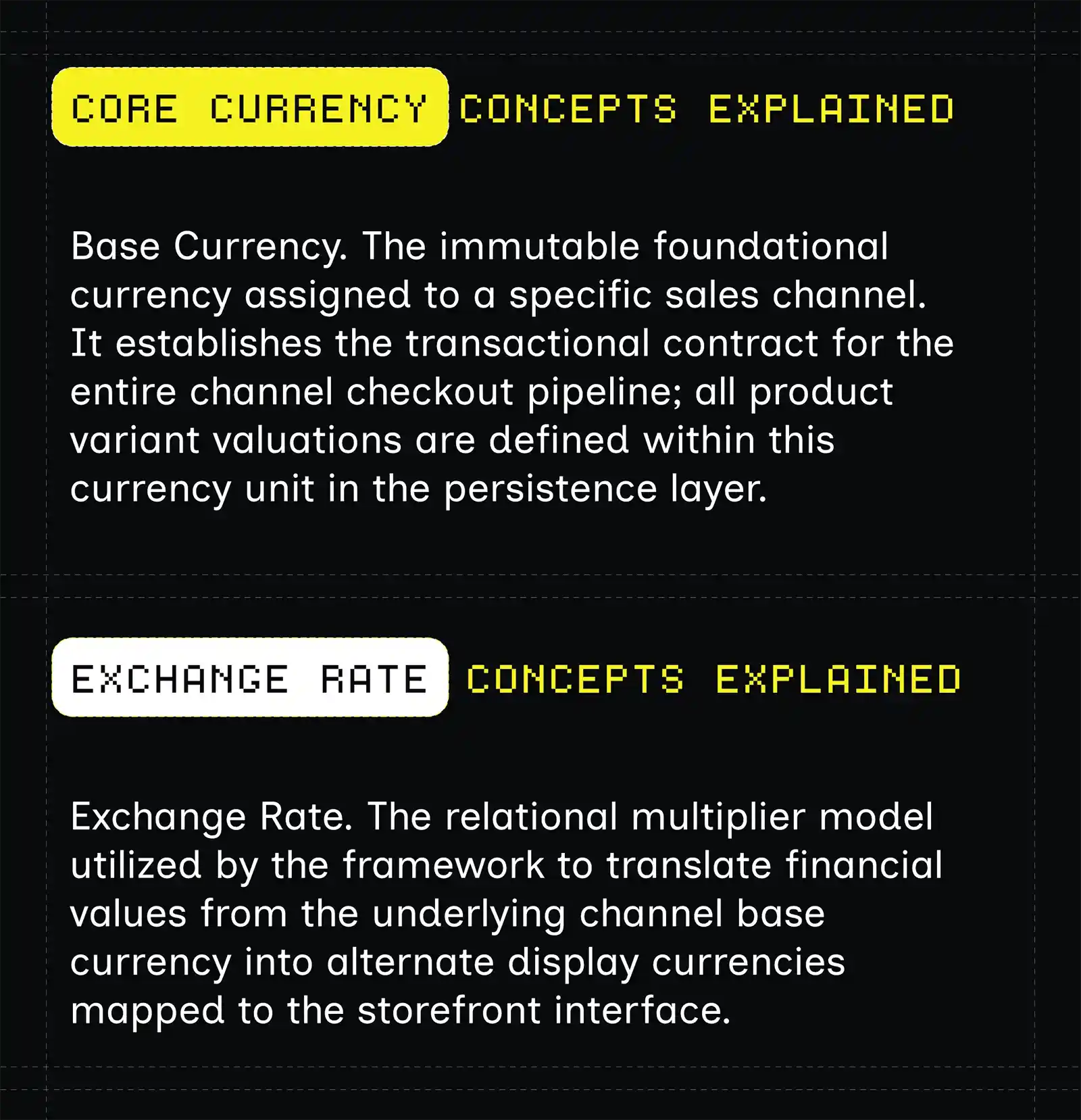
Every sales channel registered within a Sylius ecosystem requires a single, immutable Base Currency. This structural entity represents the absolute monetary baseline for database persistence; all core product variant prices for that channel are defined and stored strictly relative to this currency.
Alongside this baseline, a channel defines an array of customer-facing display options via the Currencies collection. This allows a storefront to establish a base operational currency of PLN, while empowering international customers to toggle display presentations to alternative denominations like EUR or USD.
This architectural separation is vital to understand: by default, Sylius does not maintain independent, discrete price records for every available currency option on a single product variant. Instead, the system stores a single price anchored to the channel's base currency, dynamically projecting foreign currency estimates via runtime transformation.
In its out-of-the-box multi-currency mechanism, Sylius does not persist a separate product price for every single currency. Instead, the price of a product variant is stored strictly relative to a specific sales channel, which in turn holds an immutable base currency. Valuations in all other active currencies are purely the result of runtime conversion. If your project mandates entirely independent, non-calculated prices across different currencies, this can no longer be resolved through standard configuration. It requires a distinct architectural decision regarding your pricing engine design.
Technical Mechanics of Currency Conversion in Sylius
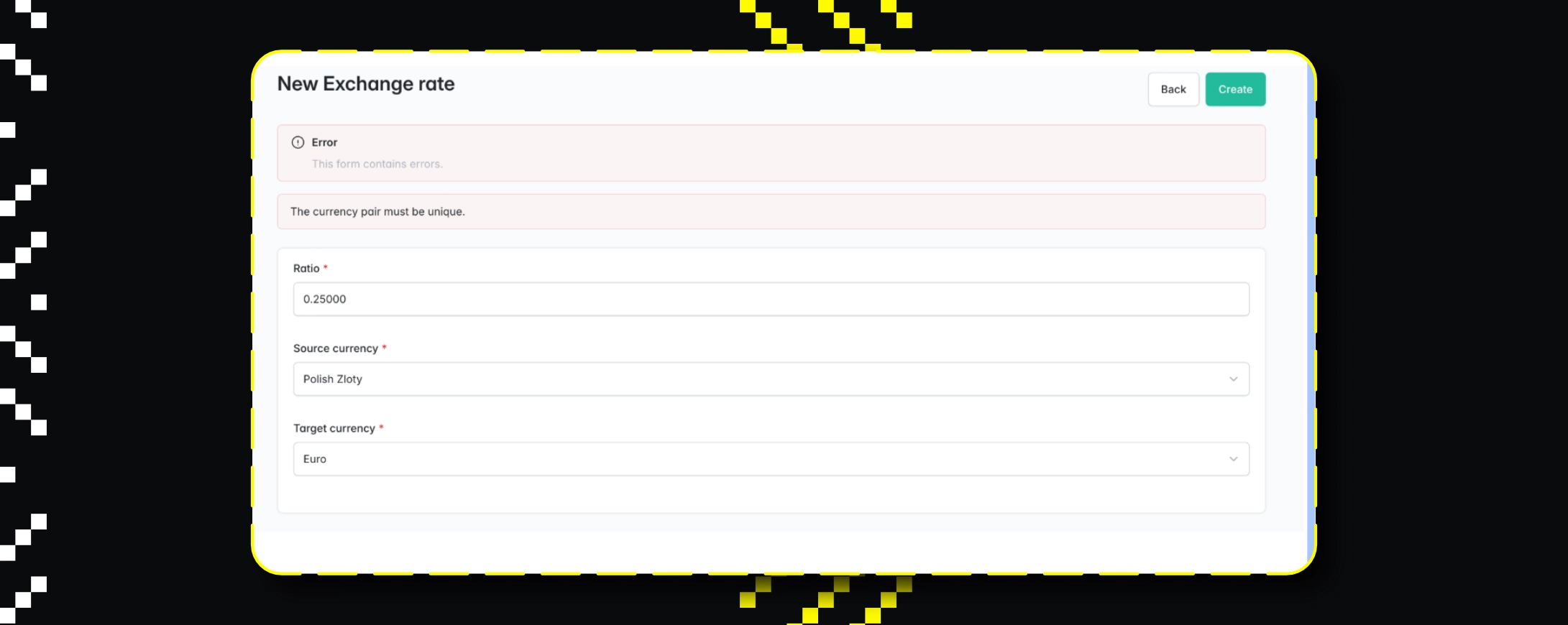
The runtime transformation of monetary values across different storefront display currencies is governed by the framework's ExchangeRate model. During execution, the system evaluates the base monetary amount and processes it using a calculated translation ratio. This lifecycle is encapsulated and executed by the internal CurrencyConverter component.
Engineers must account for a specific implementation detail: exchange rates within the Sylius core schema operate via an abstracted, double-sided relational mechanism. This architecture implies that a conversion mapping defined between PLN and EUR is managed as a singular, bi-directional database entry.
For instance, if an operator registers an explicit EUR → PLN ratio, any reverse conversion from PLN → EUR automatically executes against the reciprocal value. If your business logic mandates distinct conversion values across inverse pairs to accommodate corporate banking spreads or currency hedging risks, you must extend the core model to override this reciprocal math pattern.
Order-Level Currency Persistence Realities
During the finalized checkout lifecycle, Sylius serializes the specific currency state directly into the order record via the currencyCode attribute.
Critically, the core architecture writes the channel's defined Base Currency to this column. If your enterprise deployment requires advanced business intelligence analytics – such as historical exchange rate tracking at the precise moment of purchase, granular accounting integrations, multi-entity ERP synchronization, or automated forex gain/loss reconciliation – the out-of-the-box persistence contract must be evaluated early. To store the exact localized customer exchange multiplier directly alongside the historical order record, you must explicitly extend the order schema and checkout processing listeners.
Automatic Exchange Rate Sourcing
Sylius does not include an out-of-the-box cron routine or background handler to automatically fetch updated currency valuations. Rates must be managed manually via the administration dashboard, updated using community-supported plugins, or synchronized via dedicated integration routines tied to authoritative external APIs, such as the European Central Bank (ECB) or the National Bank of Poland (NBP).
This omission is a deliberate architectural decision. By refraining from hardcoding a coupling to an opinionated third-party financial API, the framework maintains structural independence. This ensures engineering teams retain complete control to configure custom sourcing providers, establish custom scheduled polling intervals, and implement corporate price caching behaviors.
The Sylius Taxation Subsystem Architecture
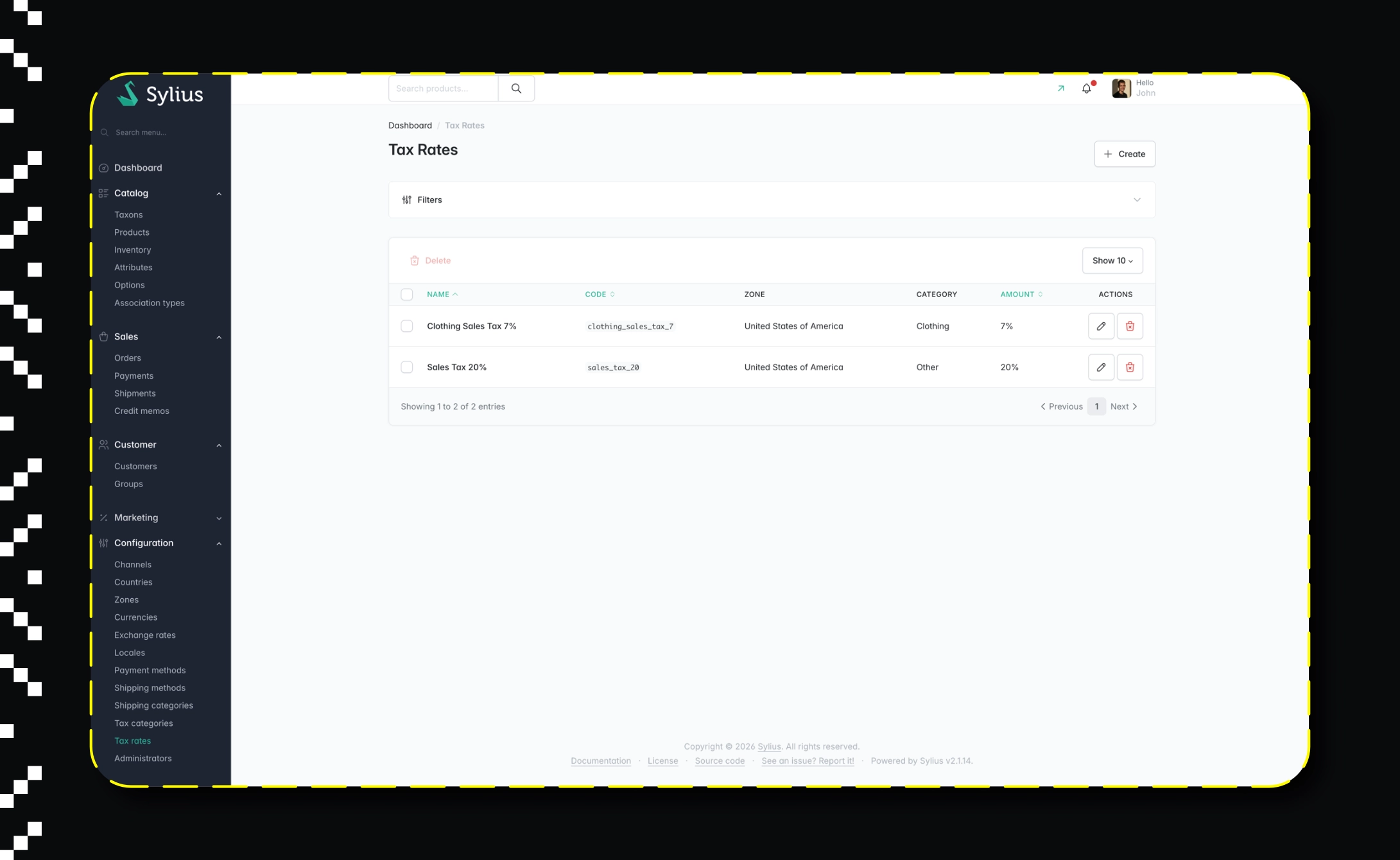
The taxation engine within Sylius relies on several decoupled domain components that collaborate to evaluate VAT or localized sales taxes during checkout. The system is structurally anchored by three core concepts: TaxCategory, TaxRate, and TaxZone.
TaxCategory. An abstract grouping assigned to product variants to classify their tax profile (e.g., Foodstuffs, Print Books, Consumer Electronics, or Standard Rate Goods).
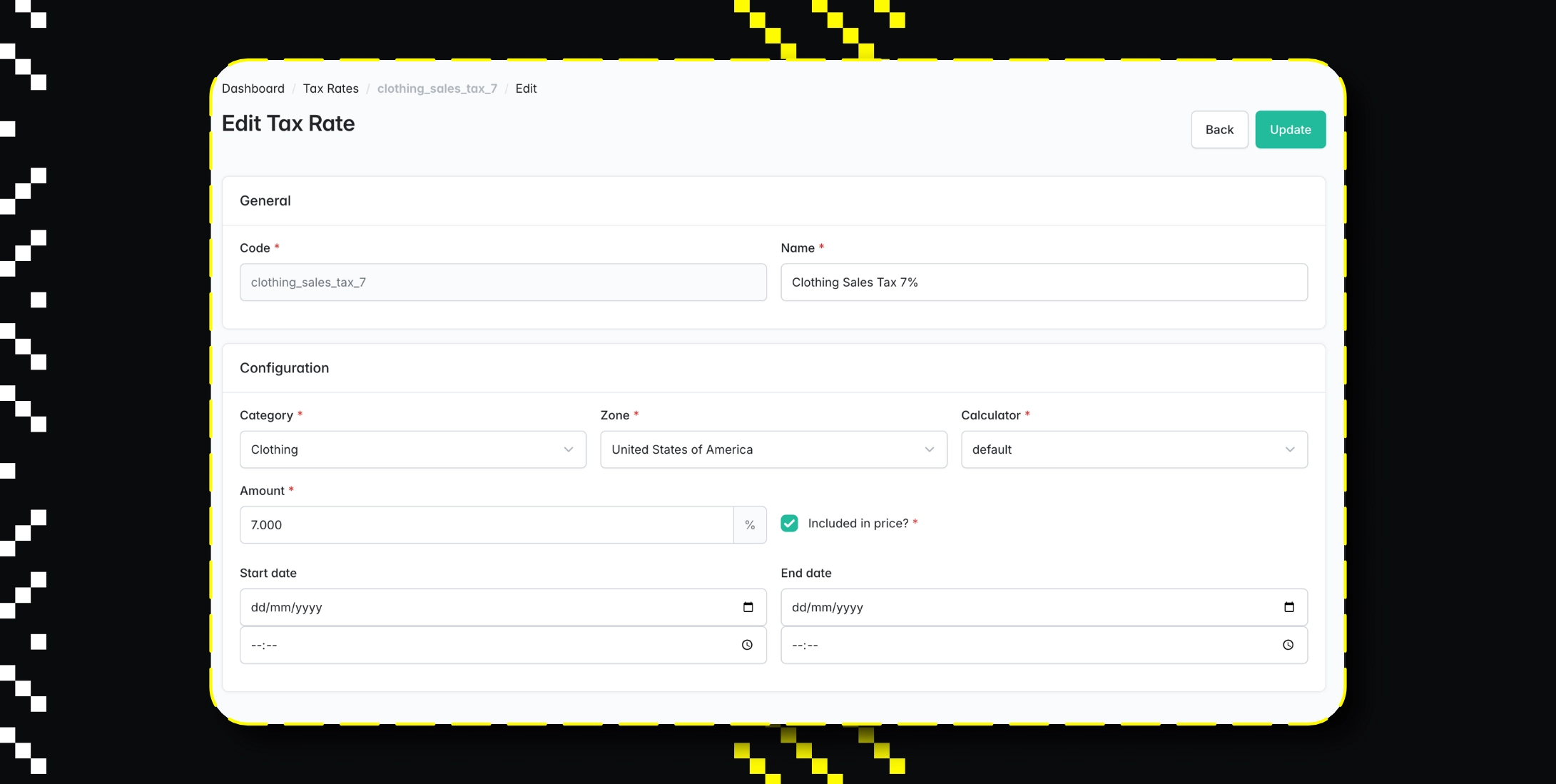
TaxRate. The discrete percentage valuation bound to both a specific TaxCategory and a geographic TaxZone. This design allows an identical commodity class to trigger dynamic tax calculations depending on the customer's region or the market context of the active channel.
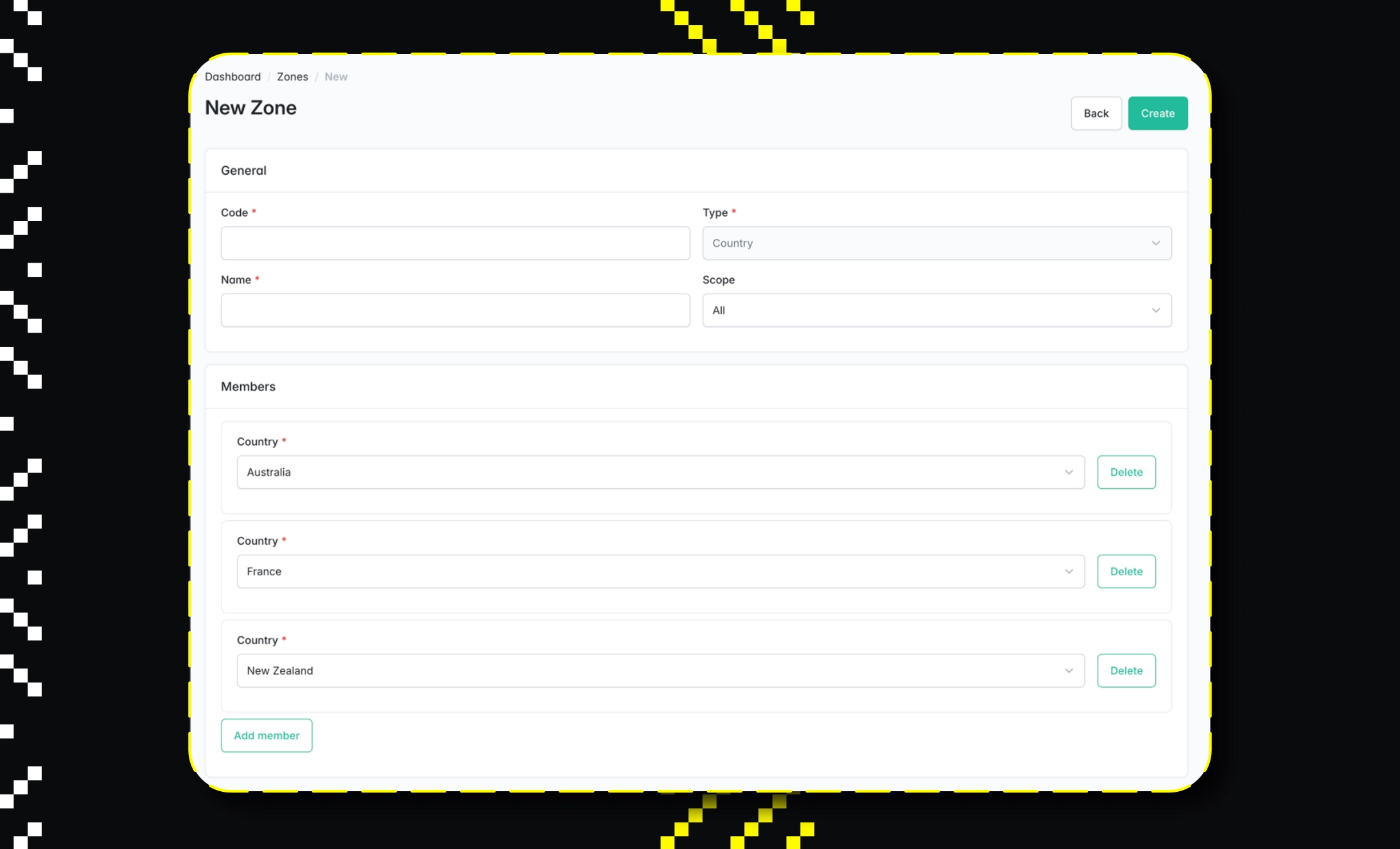
The configuration of tax regions depends heavily on the Sylius Zone engine. Within this architecture, a zone acts as a polymorphic boundary comprised of countries, regional provinces, or nested child zones.
Crucially, zones utilize an explicit configuration known as a Scope. While zones support various system behaviors, not every zone entry is visible to the taxation engine. Only zones assigned a scope value of All or Tax are ingested by tax calculation routines.
Executing the Tax Calculation Lifecycle
The tax calculation pipeline in Sylius operates as a multi-stage execution sequence. Initially, the framework resolves the customer's geographic zone based on the order's address details, utilizing the ZoneMatcherInterface to map the address attributes to the correct destination zone.
Following this resolution, the system iterates through each individual line item in the shopping cart to locate the appropriate TaxRate that matches both the product's assigned TaxCategory and the previously determined customer zone. Once a valid rate entry is successfully matched, the framework proceeds to the mathematical valuation phase.
This computation is executed by a dedicated tax calculator component, which is responsible for deriving the exact financial values and persisting them as adjustments against the cart items or the overall order. In practice, this architectural decoupling means that taxation logic in Sylius is never hardcoded into a single component; instead, it emerges dynamically from the relational configuration of categories, rates, zones, and the selected calculator type.
Tax Inclusion Strategy: Evaluating Net vs. Gross Pricing Models
When configuring a TaxRate, the framework exposes an "Included in price?" boolean flag. This configuration parameter determines whether the calculated tax amount is already embedded within the product's base price or if it must be appended as an additional charge at the end of the calculation lifecycle.
If this flag is enabled, the stored valuation is processed as a gross price. Conversely, when the flag remains unchecked, the system treats the valuation strictly as a net price.
This setting requires careful architectural planning, particularly within hybrid enterprise deployments combining B2B and B2C channels or operating across multiple international jurisdictions. Misconfigurations in this domain frequently manifest as discrepancies in storefront price presentation, mismatched cart totals, flawed financial reporting, and corrupted payloads transmitted to downstream external systems.
Native Tax Calculators in Sylius
Sylius ships with two core tax estimation strategies out of the box, exposing standard calculation options via the following components:
DefaultCalculator
Processes tax math using standard floating-point conventions and applies immediate half-up precision rounding to conform directly to the smallest currency fractional unit (e.g., rounding values directly to whole cents or groszy).
DecimalCalculator
Executes calculations utilizing higher-precision types without applying immediate fractional rounding constraints during intermediate processing. This strategy preserves decimal precision across long item quantities.
Extending the Taxation Layer: Implementing a Custom Tax Calculator
One of the primary architectural advantages of Sylius is its high extensibility, allowing developers to augment the core tax engine without introducing breaking changes or refactoring the entire subsystem. If a project demands a highly tailored tax estimation algorithm, engineers can construct a custom calculator component that satisfies the framework's native interface contract.
In enterprise deployments, this implementation workflow involves writing a discrete class and adjusting the service configuration to register the calculator within the platform settings and target TaxRate entities. Consequently, your proprietary business logic can be seamlessly injected into the existing pipeline execution chain, eliminating the need to override or compromise the structural integrity of the baseline taxation framework.
Comprehensive Overview: Currency and Taxation Subsystems
| Architectural Component |
System Responsibility |
| Base Currency |
Defines the base monetary unit of account for a specific sales channel |
| Exchange Rate |
Models the conversion multiplier across alternative storefront currencies |
| CurrencyConverter |
Executes runtime financial translations between base values and target display options |
| TaxCategory |
Classifies product variants into specific tax profiles |
| TaxRate |
Maps a tax percentage to a unique combination of TaxCategory and TaxZone |
| Zone |
Encapsulates geographical boundaries (countries, regions) for tax routing |
| ZoneMatcherInterface |
Evaluates a customer's address to match it against a configured tax zone |
| TaxCalculator |
Computes absolute tax amounts for line items or order totals based on the resolved TaxRate |
FAQ – Currency and Taxation in Sylius
Does Sylius support multiple currencies?
Yes. Sylius allows you to assign multiple currencies to a sales channel and convert prices using exchange rates.
Does Sylius automatically fetch currency exchange rates?
No. Exchange rates can be updated manually or via custom integrations and plugins.
How does Sylius calculate VAT?
The framework determines the customer's zone, searches for the appropriate tax rate, and uses a calculator to compute the tax for the cart items.
Can you create a custom tax calculator in Sylius?
Yes. The framework's architecture allows you to extend the tax logic and implement custom calculators.
Does Sylius save the currency exchange rate in the order?
No. By default, Sylius places the order in the base currency, so neither the rate nor the currency seen by the customer is saved.
Does Sylius support gross and net prices?
Yes. The TaxRate mechanism allows you to determine whether the tax is included in the product price or should be added separately.