Sylius vs Magento: A Comprehensive E-commerce Platform Comparison
Choosing an e-commerce platform affects much more than the initial launch of an online store. It also influences future development, integrations with other systems and the total cost of maintaining the platform over the years. It is a decision that can shape your architecture, business processes and the organization's ability to evolve for a long time.
Magento and Sylius are among the most popular platforms used for medium-sized and large e-commerce projects. Although they are often compared, they represent two different approaches to building modern commerce systems. In this article, we look at their strengths, limitations and the scenarios in which each platform works best.
If you don't have time to read the entire article, here are the key takeaways.
If you're looking for...
The better choice will usually be
A large number of ready-made features
Magento
Standard sales processes
Magento
A large community and broad availability of specialists
Magento
A wide selection of ready-made plugins and extensions
Magento
A fast launch of a conventional online store
Magento
Custom business processes
Sylius
A B2B platform
Sylius
High flexibility for custom integrations
Sylius
A simpler, easier-to-extend and more transparent architecture
Sylius
Lower infrastructure requirements
Sylius
Headless architecture
Both platforms
Long-term development
Sylius
The Symfony ecosystem
Sylius
There is no single platform that will be the best choice for every project. The final decision should be based on your business processes, development plans and the architecture of your entire IT environment.
Sylius or Magento?
The shortest answer is: it depends on the project. Magento and Sylius solve the same problem, but they approach it in very different ways.
Magento was designed as a complete e-commerce platform with a rich set of features available out of the box. It works well for organizations that want to rely on ready-made mechanisms and relatively standard sales processes.
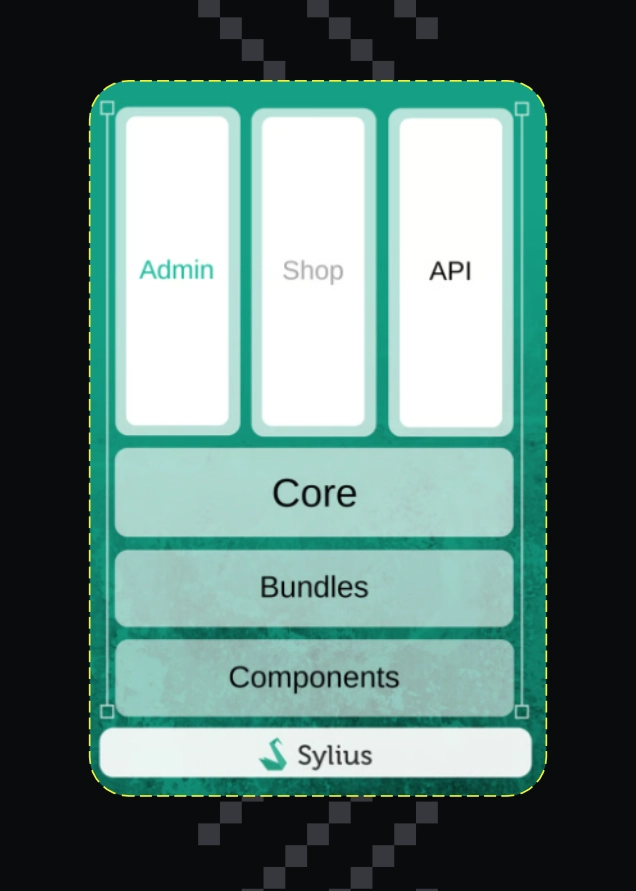
Sylius takes a different approach. It provides a solid foundation built on Symfony and allows the platform to be developed around the requirements of a specific business. This makes it particularly well suited to B2B projects, enterprise platforms and solutions built around custom business logic.
This does not mean that one platform is inherently better than the other.
The main differences lie in their design philosophy and the way each system is developed. These differences have the greatest impact on maintenance costs, ease of further development and what the platform will be capable of several years from now.
Focus on core e-commerce functionality, with the ability to add further elements when the project actually requires them
Architecture
Comprehensive e-commerce platform
Symfony-based e-commerce framework
Admin panel
Extensive out of the box
Developed according to the organization's needs
Product management
More ready-made functionality
Greater flexibility of the data model
Product relationships
Standard relationship types
Custom relationship types
SEO
Extensive functionality available out of the box
Greater freedom in designing the solution
Business processes
Events and observers
State machines
Headless
Yes
Yes
Integrations
Broad ecosystem of ready-made modules
High degree of design flexibility
Best suited to
Standard e-commerce projects
B2B, enterprise and custom business processes
Who Is This Comparison For?
We prepared this guide for people responsible for technology decisions and the development of e-commerce platforms.
It will be particularly useful if you:
are planning to build a new e-commerce platform,
are considering a migration from Magento or another solution,
are developing a B2B platform,
are designing a headless architecture,
are responsible for integrations with ERP, PIM or other systems,
are looking for a platform that can evolve alongside your business.
This is not a platform ranking or a feature checklist. It is a practical comparison of two different approaches to building modern e-commerce, prepared from the perspective of people who design and develop complex commerce platforms on a daily basis.
Sylius vs Magento vs Shopify Plus: which e-commerce platform is best for mid-market? 7 factors
Architecture: The Foundation That Determines How Your Platform Can Evolve
Architecture is one of the most important areas to consider before choosing an e-commerce platform. It does not directly determine what the store looks like or which features users can see, but it has a major impact on how easily the system can be developed two, five or ten years from now.
Architecture affects how new features are implemented, how the platform integrates with other systems and how much the entire solution costs to maintain.
Magento or Sylius? Two Different Approaches
Magento was designed as a complete e-commerce environment. From the moment it is installed, it provides a broad set of features and mechanisms for supporting sales, marketing and store management.
Sylius takes the opposite approach. It provides a Symfony-based e-commerce foundation and allows the platform to be developed according to the requirements of a specific project. The organization builds only the elements it actually needs.
When Is Magento a Better Fit?
Magento can be a good choice when:
most sales processes follow standard scenarios,
the organization wants to use a large number of ready-made features,
getting the project up and running quickly is important,
the planned scope of architectural changes is relatively limited.
In projects like these, the rich set of features available from the start can, in theory, shorten implementation time and reduce the amount of development work required. In practice, much depends on how closely Magento's standard mechanisms match the company's processes. If significant customization is required, the advantage of having those ready-made features can quickly diminish.
When Does Sylius Offer a Greater Advantage?
Sylius shows its strengths most clearly when the platform needs to evolve alongside the business.
This applies particularly to projects involving:
B2B sales,
custom business processes,
extensive integrations with ERP, PIM, WMS or CRM systems,
headless architecture,
long-term platform development.
In these scenarios, greater architectural flexibility makes it easier to adapt the platform as the organization's needs change.
Why do companies choose Sylius? Stability, scalability and community
Admin Panel: Ready-Made Features or Full Customization?
The admin panel is where business teams manage products, orders, customers and promotions. The differences between Magento and Sylius, however, are not simply about the number of available features.
They reflect two different approaches to designing tools for business users.
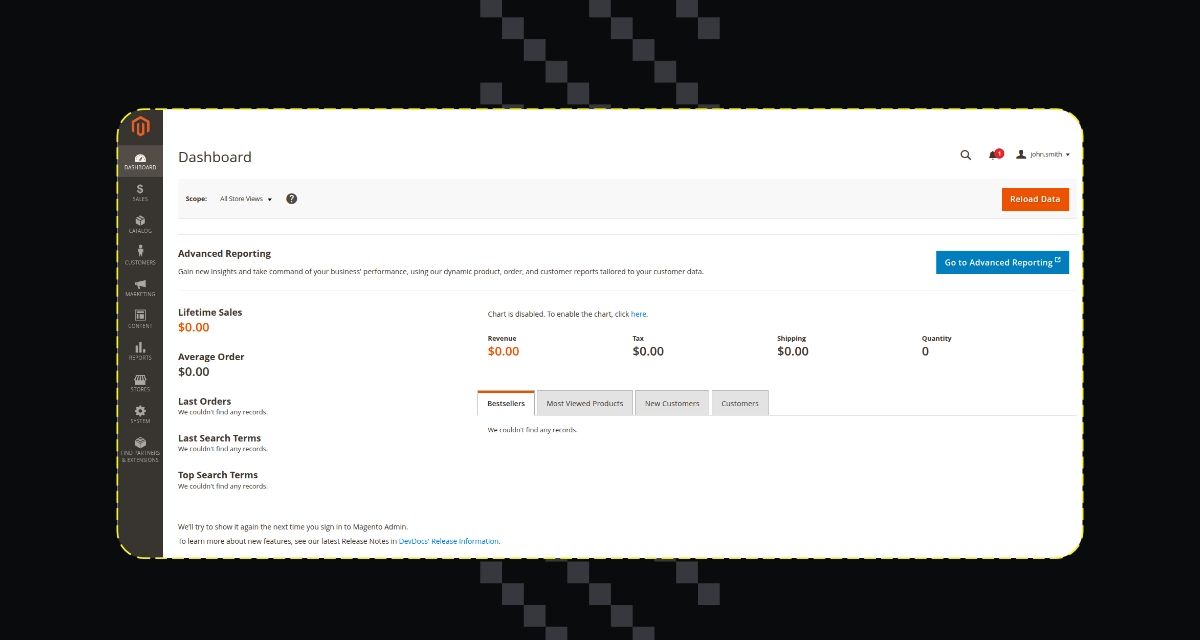
Does Magento Offer a More Extensive Admin Panel?
Yes. A standard Magento installation provides a broad set of ready-made features. Administrators can manage the product catalog, categories, promotions, users, SEO settings, reports and store configuration without having to extend the admin panel first.
This is one of Magento's biggest advantages, particularly in projects that rely on standard sales processes.
However, a larger number of features also means more elements that need to be configured, maintained and tested during future updates.
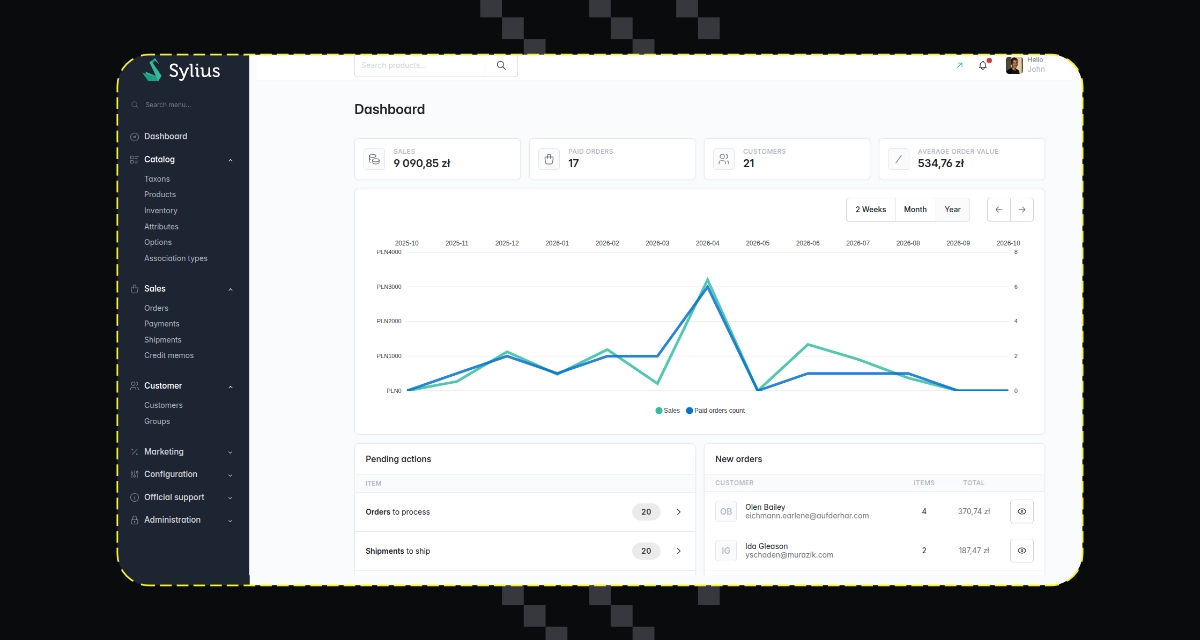
Is the Sylius Admin Panel More Limited?
If we compare standard installations only, the answer is yes. This does not result from a limitation of the platform, but from its philosophy.
Sylius assumes that the admin panel should evolve alongside the organization. Instead of providing every possible feature from day one, it allows teams to build only the elements that actually support their business processes, without overloading the admin panel with functionality that would remain unused in a particular organization.
This approach works particularly well in B2B projects and enterprise platforms, where the admin panel often requires individual customization.
Does More Functionality Mean a Better Admin Panel?
Not necessarily. A more extensive admin panel provides more ready-made capabilities, but this does not always translate into greater efficiency. Every additional feature needs to be configured, maintained and tested.
At the same time, an admin panel that is too simple may require teams to build functionality that other platforms provide from the start.
When choosing a platform, it therefore makes more sense to assess how well its features match the organization's actual business processes rather than simply comparing the number of available features.
Product Management: Where Do the Differences Really Matter?
Both platforms provide extensive product catalog management capabilities. The difference is not whether you can build an advanced catalog, but how easily you can adapt it to the needs of a specific business.
Magento provides more ready-made mechanisms immediately after installation. Sylius focuses on a simpler data model and greater flexibility, making it easier to adapt the platform to custom processes and integrations.
When Does Magento Have an Advantage?
Magento works well for organizations managing large product catalogs that primarily rely on the platform's standard mechanisms.
Administrators can use extensive attribute sets, different product types and numerous features that support catalog organization without having to implement them separately.
If the product management process matches the platform's capabilities, Magento allows teams to get started quickly.
When Is Sylius a Better Fit?
Sylius also provides extensive product management capabilities, but builds them around a simpler data model.
The platform clearly separates product attributes, which describe product characteristics, from product options, which define variants such as color, size or capacity.
This approach simplifies platform development and makes integrations with PIM and ERP systems easier, particularly as the product catalog becomes increasingly complex.
Categories or Taxons?
This is one of the most distinctive differences between Magento and Sylius.
Magento uses a traditional category system. For most online stores, this is entirely sufficient and easy to manage.
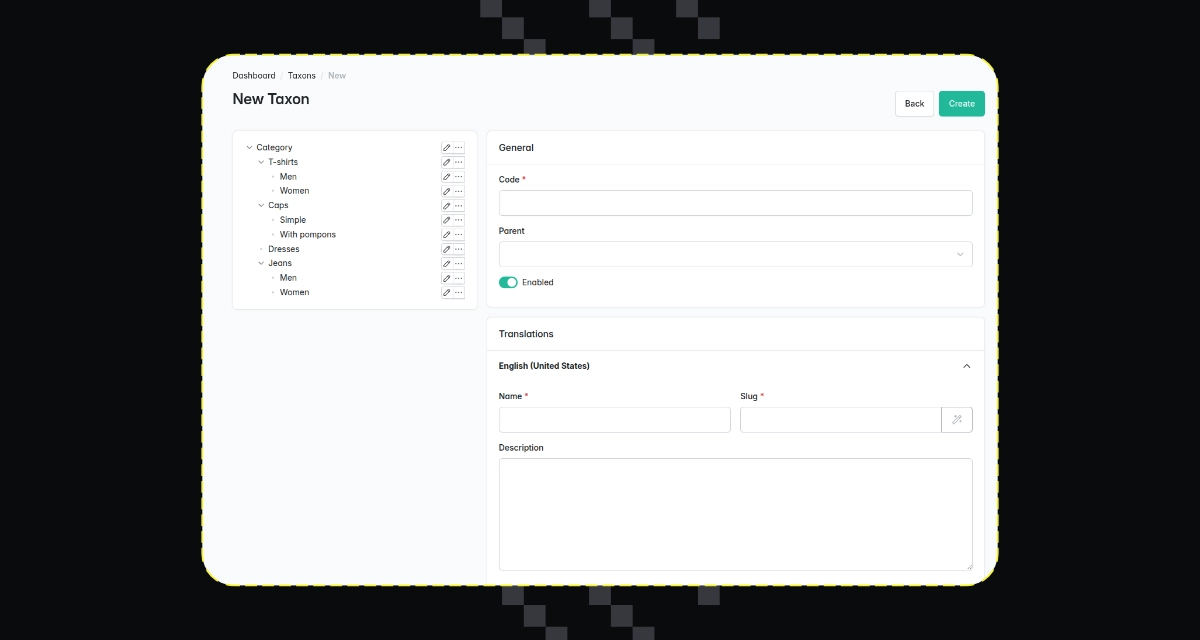
Sylius uses Taxons, a more universal mechanism for organizing data.
A Taxon can represent a category, manufacturer, brand, collection, season, customer segment, product line or virtually any other hierarchical information structure.
This means that a single product can exist in many different business contexts without requiring additional workarounds or custom solutions.
For organizations managing complex catalogs or B2B sales, the greater flexibility of Taxons can often provide a real advantage.
Product Relationships
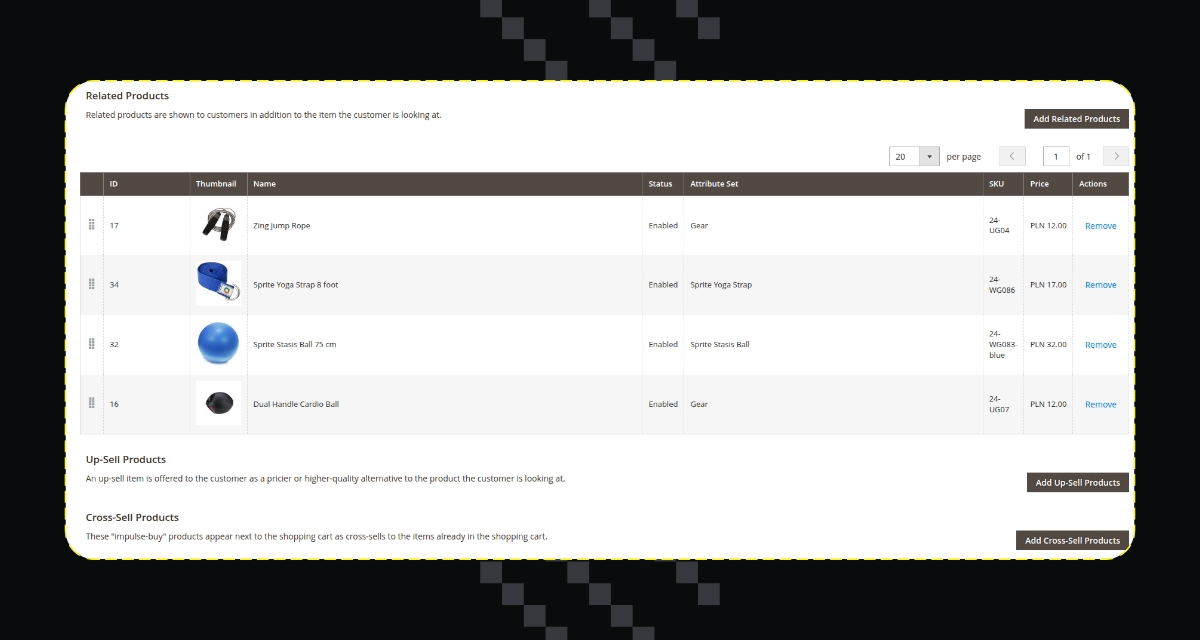
This is another area where the differences between the platforms are particularly visible. Magento provides three standard relationship types:
Related Products,
Cross-sells,
Up-sells.
For most online stores, this set will be entirely sufficient.
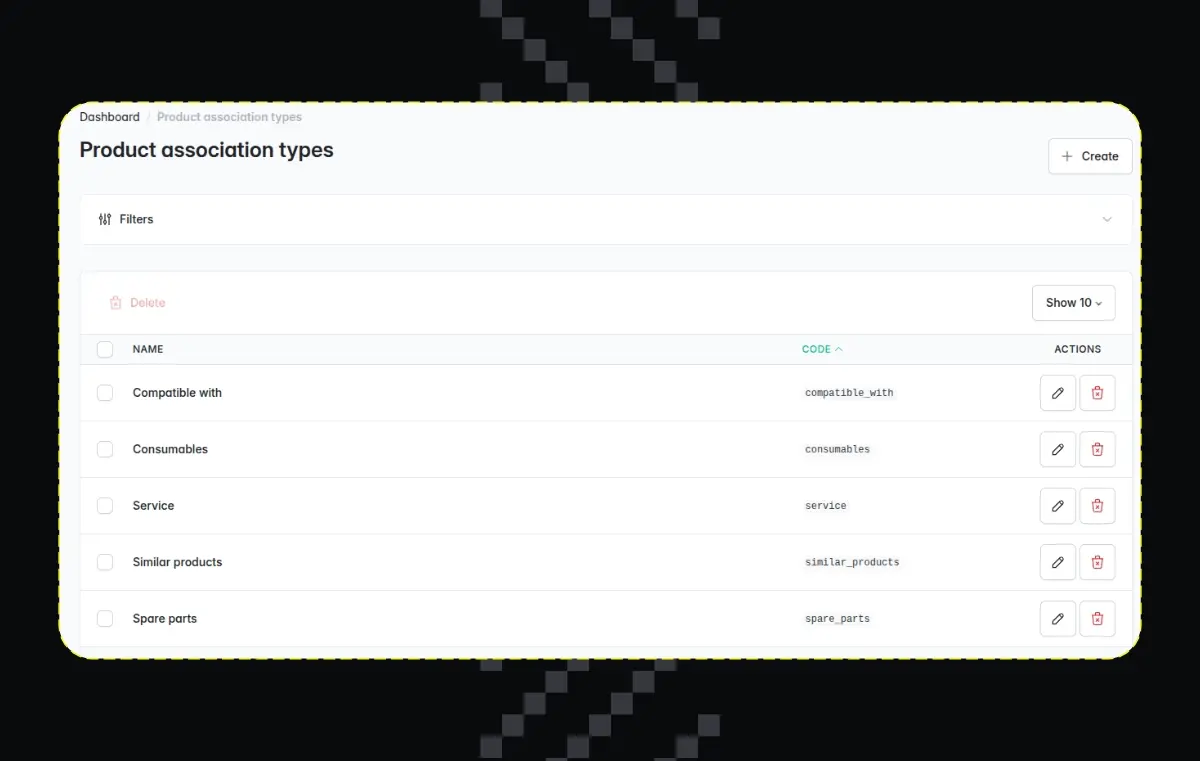
Sylius takes a much more flexible approach.
Administrators can define their own relationship types between products and adapt them to the organization's business logic. They are not limited to a small number of predefined sales scenarios.
This works particularly well in B2B projects, product configurators and enterprise platforms, where relationships between products are driven by business processes rather than solely by cross-selling or upselling mechanisms.
Promotions and Pricing Rules
Both Magento and Sylius provide ready-made promotion mechanisms that can handle most standard scenarios without additional development work. Magento offers slightly broader capabilities out of the box in this area.
The difference becomes more apparent when requirements are non-standard. Sylius makes it easier to create custom promotion rules and actions tailored to the specifics of a particular business process.
If an organization expects to frequently develop its own advanced promotion logic, Sylius provides greater flexibility.
Business Processes: This Is Where the Biggest Differences Begin
In a simple online store, the sales process looks similar regardless of the platform. A customer adds a product to the cart, places an order, pays for it and waits for delivery.
The situation changes as the organization grows.
B2B sales, individual pricing, credit limits, multi-stage order approvals and ERP integrations turn an e-commerce platform into something more than an online store. It starts managing business processes.
This is where the difference between Magento and Sylius becomes particularly visible.
When Does Magento Have an Advantage?
Magento allows teams to build complex business processes using events, observers and custom modules that extend the platform's behavior.
This approach provides considerable flexibility and works well in many enterprise projects. As the platform grows, however, managing business processes based on events and observers becomes increasingly difficult. If the dependencies between individual elements are not well documented, tracing the entire process can become time-consuming and make further development of the system more difficult. In practice, this is one of the challenges teams may encounter when working with complex Magento implementations.
When Is Sylius a Better Fit?
Sylius uses a state machine mechanism (Symfony Workflow) that makes it possible to model business processes in a clear and structured way. Orders, payments and shipments are represented as a sequence of states, making it easier to analyze the platform's logic and develop it as the business evolves.
A similar approach applies when extending the cart or order recalculation process. Individual steps, such as recalculating prices, promotions, shipping or taxes, can be executed in a defined order based on priorities. Adding another stage is therefore straightforward and transparent: instead of attaching additional logic to events, teams can add a new step to the process and define its position in the configuration.
This approach works particularly well in B2B projects and enterprise platforms where the sales process spans multiple departments and systems.
Example
Imagine a manufacturer of industrial machinery.
Once an order has been placed, the platform needs to:
check component availability,
verify the customer's credit limit,
obtain approval from the sales department,
confirm the delivery date,
generate production documents,
pass the order to the warehouse.
The more stages a process contains, the more important the way that process is modeled becomes. This is why platform architecture eventually starts to affect the cost of further development.
Headless Commerce and Modern Architecture
Just a few years ago, an e-commerce platform was responsible for the entire sales process. Today, it is increasingly becoming one component of a larger IT ecosystem.
The frontend operates independently from the backend, products are managed in a PIM system, orders are handled by an ERP, and marketing teams use their own automation and analytics tools.
In this model, the e-commerce platform becomes the center of business logic and integrations with other systems.
Do Magento and Sylius Support Headless Architecture?
Yes. Both platforms can be used to build headless solutions and integrate with modern frontend applications.
The difference is therefore not whether headless architecture can be built, but how easy it will be to develop as the number of processes and integrations grows.
Is Magento Faster Than Sylius?
There is no single answer that will be true for every project. In practice, however, Sylius will often be faster than Magento or require less investment to achieve good performance.
Magento 2 is a comprehensive, heavier platform with relatively high infrastructure requirements. It uses a number of performance mechanisms, including caching and data indexing, but even with a standard configuration it requires a properly prepared environment to deliver an acceptable level of performance.
Sylius has significantly less overhead and allows teams to build a solution using only the elements that are actually required in a particular project. As a result, many implementations can achieve good performance with lower infrastructure requirements.
Another important difference appears when further performance optimization is required. With Sylius, a simpler and lighter architecture often leaves more room for additional optimization without significantly increasing the resources required. Magento already uses many performance optimization mechanisms by default, so further optimization may require greater investment in infrastructure and more advanced technical work.
This does not mean that Sylius will be faster in every project. Performance still depends on factors including solution architecture, implementation quality, infrastructure, data modeling and integrations. Based on our experience, however, Sylius provides a better performance baseline in most projects and makes it easier to achieve further improvements with less investment.
Scalability Is About More Than the Number of Users
Scaling an e-commerce platform is not just about handling more traffic. In practice, the development of the entire technology environment often becomes a greater challenge.
Over time, more integrations are added: ERP, PIM, WMS, OMS, CRM, marketplaces, mobile applications and marketing automation tools. Each one increases the number of dependencies and business processes.
This is why choosing a platform should involve more than asking how many users your store needs to support today. You should also consider what the platform will look like five or ten years from now.
If a project is based primarily on standard sales processes, both Magento and Sylius can be good choices.
If, however, the platform is expected to become a central part of the IT ecosystem and undergo intensive development over many years, ease of further extension becomes much more important. This is where Sylius has the advantage.
Total Cost of Ownership (TCO)
One of the most common questions when choosing an e-commerce platform is: is Magento cheaper than Sylius?
In most cases, it is not worth looking solely at the cost of the initial implementation. TCO (Total Cost of Ownership), meaning the total cost of owning the platform over a longer period, is far more important.
In practice, this cost consists of several different areas.
Infrastructure costs are generally higher for Magento. The platform has greater requirements and needs a more extensive environment to perform efficiently.
The cost of developing custom functionality is also often higher with Magento. This results, among other factors, from the greater complexity of the platform, the amount of time required for development and the cost of specialists needed to develop it.
Magento can, however, prove less expensive when an organization is able to rely largely on functionality available out of the box. If the platform's standard mechanisms match the needs of the business, some functionality can be used without having to design and implement it separately.
In Sylius, some of these elements may require an appropriate plugin or a custom solution. On the other hand, when a project involves many custom processes and bespoke features, its flexible architecture generally makes development easier and helps reduce the cost of subsequent changes.
The question, therefore, should not simply be: “Which platform is cheaper to implement?” A more useful question is: “Which platform will be more cost-effective over the entire lifecycle of our project?”
What Really Affects TCO?
The total cost of a platform depends primarily on the answers to the following questions:
How much functionality will require custom development?
How frequently will the platform be developed?
How complex will the business processes and integrations be?
What infrastructure resources will the platform require?
The more custom the project becomes, the more important architecture and ease of further development are.
E-commerce ROI: CAPEX vs OPEX. How to Calculate Investment and Maintenance Costs of an Online Store
Testing and Development Safety
The ability to develop a platform safely is just as important as the number of features it provides.
Every new integration, module or change to a business process increases the risk of errors. This is why automated testing is one of the foundations of safely introducing changes in projects that are developed over many years.
Sylius has been developed in line with Symfony ecosystem practices from the beginning and makes extensive use of business scenario testing. This makes it easier to verify entire processes rather than just individual pieces of code.
Magento also provides extensive test automation capabilities. Regardless of which platform you choose, it is the quality of the tests, rather than the technology itself, that determines how safely future deployments and updates can be introduced.
Community and Ecosystem
The platform ecosystem becomes particularly important when a project is expected to be developed over many years.
Magento has one of the largest ecosystems in the e-commerce world. It offers a broad network of partners and specialists, as well as a large selection of ready-made extensions.
This is a major advantage, but it is also worth remembering that every additional plugin becomes part of the platform's architecture. Before implementing one, you should assess not only its functionality, but also the quality of its code, testing approach, compatibility with the current platform version and the activity of its provider.
In practice, the quality of extensions often determines how safely future updates can be carried out.
Sylius has a smaller plugin ecosystem, but its official extensions are generally developed in line with Symfony best practices, with a strong emphasis on testing and predictable behavior.
For organizations already working within the Symfony ecosystem, this can be a significant advantage.
What Will Your Platform Look Like in Five Years?
The first version of an online store is almost never the final one. Over time, new integrations and sales channels appear, business processes change and user requirements grow.
This is why choosing an e-commerce platform requires looking far beyond the cost of the initial implementation.
What matters much more is how easily the platform can be developed three, five or ten years from now.
If your priority is a rich ecosystem of ready-made features and extensions, Magento is a very strong candidate.
If, on the other hand, your priorities are long-term development, consistent architecture and the ability to adapt the platform to changing business processes, Sylius is worth considering.
The way a platform supports the organization's development over the long term is often what ultimately determines whether the investment proves to be the right one.
SEO and Marketing
SEO is an important part of any e-commerce platform because its architecture and technical capabilities have a real impact on product visibility in search engines and systems that use structured data and content.
It is worth remembering, however, that even the best features available in an admin panel cannot guarantee high visibility. Information architecture, content quality, platform performance and the technical correctness of the entire solution also play an important role.
Does Magento Offer More Ready-Made SEO Features?
Yes. Magento provides an extensive set of tools for managing meta tags, URLs, redirects, sitemaps and indexing settings. As a result, many SEO activities can be carried out without involving the development team, which is a major advantage for organizations with their own marketing teams.
What Does SEO Look Like in Sylius?
Sylius can also be used to build a store that is well prepared for SEO, but it remains consistent with its overall philosophy.
Instead of providing an extensive set of ready-made features, it offers a solid foundation that can be developed according to the project's requirements.
This approach provides greater freedom when designing the SEO environment and makes it easier to adapt the platform to an organization's individual strategy.
Does More Functionality Mean Better SEO?
No.
This is one of the most common misconceptions.
SEO effectiveness is primarily determined by:
information architecture,
content quality,
internal linking,
performance,
technical correctness,
user experience.
The platform is simply a tool that supports the implementation of this strategy.
Sylius vs Magento: Which Platform Should You Choose? A Quick Guide
If you're still wondering which platform will be the better fit after reading the full comparison, the scenarios below may help you make a decision.
A Manufacturer Developing B2B Sales
Sylius will usually be the better fit.
A large number of custom processes, individual pricing, order approval workflows and ERP integrations mean that greater architectural flexibility becomes a real advantage.
A Conventional B2C Online Store
If most processes follow standard sales scenarios, Magento may allow you to launch the platform faster thanks to its broad set of ready-made features.
An Organization Planning a Headless Architecture
Both platforms provide strong support for headless architecture.
The choice should primarily be based on business processes, development plans and the experience of the technology team.
A Company Already Using Symfony
If your team already works within the Symfony ecosystem, Sylius will often be a natural choice. It allows you to use familiar design patterns and maintain architectural consistency across different systems.
Another important factor is that Sylius is regularly updated to support current versions of Symfony and other key dependencies, making it easier to keep the project on a modern technology stack. With Magento 2, technical debt accumulating over time and reliance on older mechanisms can present a greater challenge, as replacing them in such an extensive platform is significantly more difficult.
Sylius vs Magento: Frequently Asked Questions (FAQ)
Is Sylius Better Than Magento?
The two platforms are designed for different scenarios. Magento provides more ready-made features, while Sylius offers greater flexibility in projects that require custom business processes.
Is Magento Suitable for B2B Projects?
Yes. Magento can be used to build extensive B2B platforms. However, if a project requires a large number of custom processes and integrations, Sylius is also worth considering.
Is Sylius Suitable for Large Online Stores?
Yes. Sylius is successfully used in enterprise projects and platforms that support complex sales processes and integrations with multiple systems.
Which Platform Is Easier to Develop?
For standard projects, development may be easier with Magento thanks to its larger number of ready-made features and plugins.
However, if the platform is expected to undergo intensive development over many years, Sylius provides greater flexibility.
Which Platform Offers Better Support for Headless Architecture?
Both platforms can be used to build headless architectures. The choice should primarily depend on the project's requirements and the development plan for the entire IT environment.
Which Platform Integrates Better with ERP and PIM Systems?
Both platforms provide extensive integration capabilities.
In projects involving numerous custom integrations, Sylius often provides greater flexibility. It is worth adding, however, that Magento offers a larger number of ready-made and proven integrations.
Which Platform Will Be Cheaper?
There is no way to answer this without understanding the project.
The total cost depends on factors including the scope of functionality, the number of integrations, how the platform will be developed and the changes planned over the coming years.
Does a Larger Number of Plugins Mean a Better Platform?
Not necessarily.
What matters is not only the number of available extensions, but also their quality, how they are maintained and their compatibility with the current version of the platform.
How Should You Choose the Right E-commerce Platform?
The best place to start is by analyzing your business processes, planned integrations and the direction in which your organization is expected to develop.
Choosing between Sylius and Magento rarely comes down to comparing feature lists. The right decision depends on your business processes, integrations, existing technology stack and plans for the next few years. If you're currently evaluating e-commerce platforms, planning a migration or wondering which architecture will make the most sense for your project, we'd be happy to help you assess the options. Tell us what you're building, what your current setup looks like and where you expect the platform to go next. We'll help you look at the decision from both a business and technical perspective.